Java 26: Loom Maturity and the New Concurrency Horizon
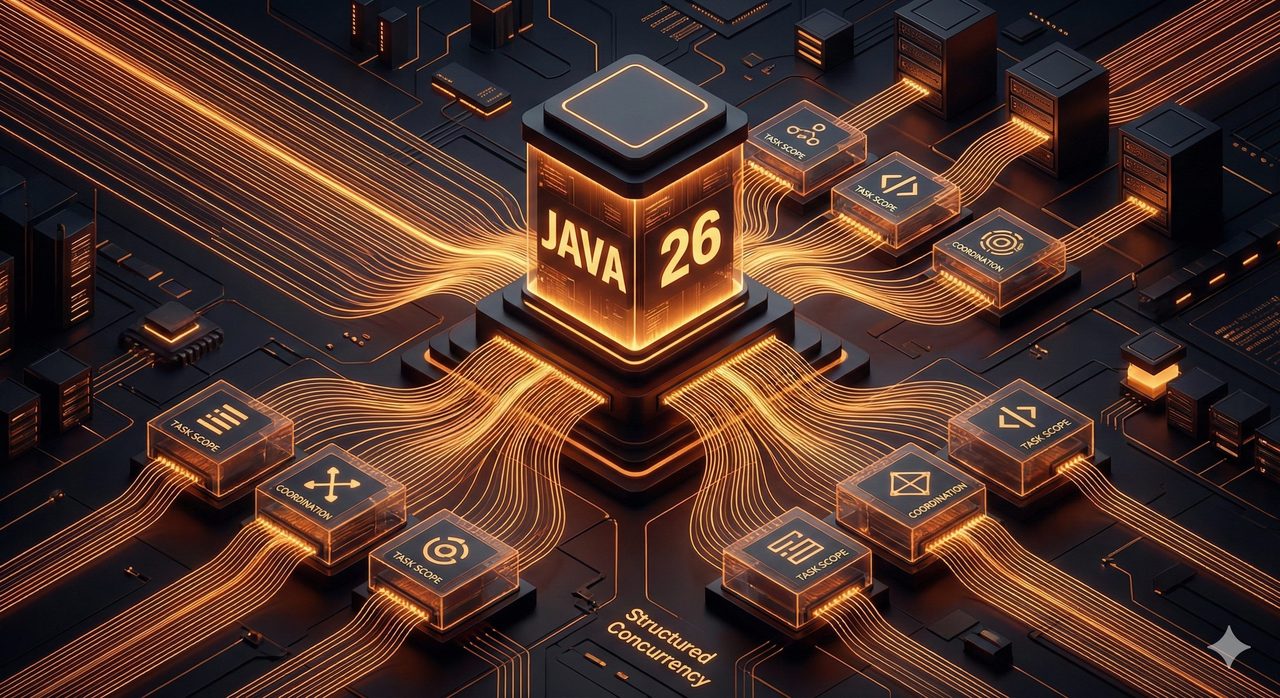
Java 26: The Era of Disciplined Concurrency
Two and a half years after Project Loom changed everything. The hype is gone. The practical reality of high-throughput applications is here. It's no longer about *what* virtual threads are, but how we wield them.
The Post-Loom Landscape
Since late 2023, the ecosystem has undergone a massive collective experiment. The promise of "thread-per-request" has been fulfilled. Frameworks like Spring Boot and Quarkus have optimized their reactive stacks to embrace blocking code again.
In 2026, stability is an assumption. The JVM scheduler has been tuned to handle carrier thread pinning and heavy load preemption seamlessly.
Concurrency management has been outsourced back to the JVM where it belongs.
Java 26: The Guardrails
Target: March 2026Key Shift
Java 26 isn't introducing a revolutionary new concurrency model; it is focused on finalizing the APIs that make managing millions of virtual threads disciplined and observable.
Structured Concurrency
Moving from "fire-and-forget" to defined scopes. StructuredTaskScope ensures subtasks coordinate cancellation and error handling automatically.
Scoped Values
The performant successor to ThreadLocal. Immutable data sharing that perfectly matches the lifecycle of virtual threads without memory leaks.
The New Concurrency Mindset
We are no longer hoarding expensive OS threads. The challenge is now architectural: designing systems where every operation can effortlessly branch into parallel sub-operations. With Java 26, the platform remains the premier choice for scalable backend systems.